We have obtained documents on a project currently being prepared by Stadler Minsk CJSC. They concern 30 four-car electric multiple units for the Belarusian Railway: all 120 cars are to be assembled in Belarus, with the first trains to be handed over to the customer as early as December 2027 and the last at the end of 2029. The Fanipol plant is already looking for local subcontractors for part of the work on this order.
On October 23, Lukashenka commented on the Fanipol plant. According to him, Stadler Minsk’s work “does not yield proper results,” and “the creation of a Belarusian train has not yet reached the production stage.” The State Control Committee has been instructed to investigate the situation and, by year-end, assess the role of the BCh as a consumer of the plant’s products.
Just over a year ago, the Swiss company Stadler, which owns the Fanipol plant, asserted that it had no intention of supplying trains for the needs of the BCh and could not do so under current sanctions. We explain what is known about the project and whether such an order can be fulfilled without circumventing sanctions.
What the Documents Say
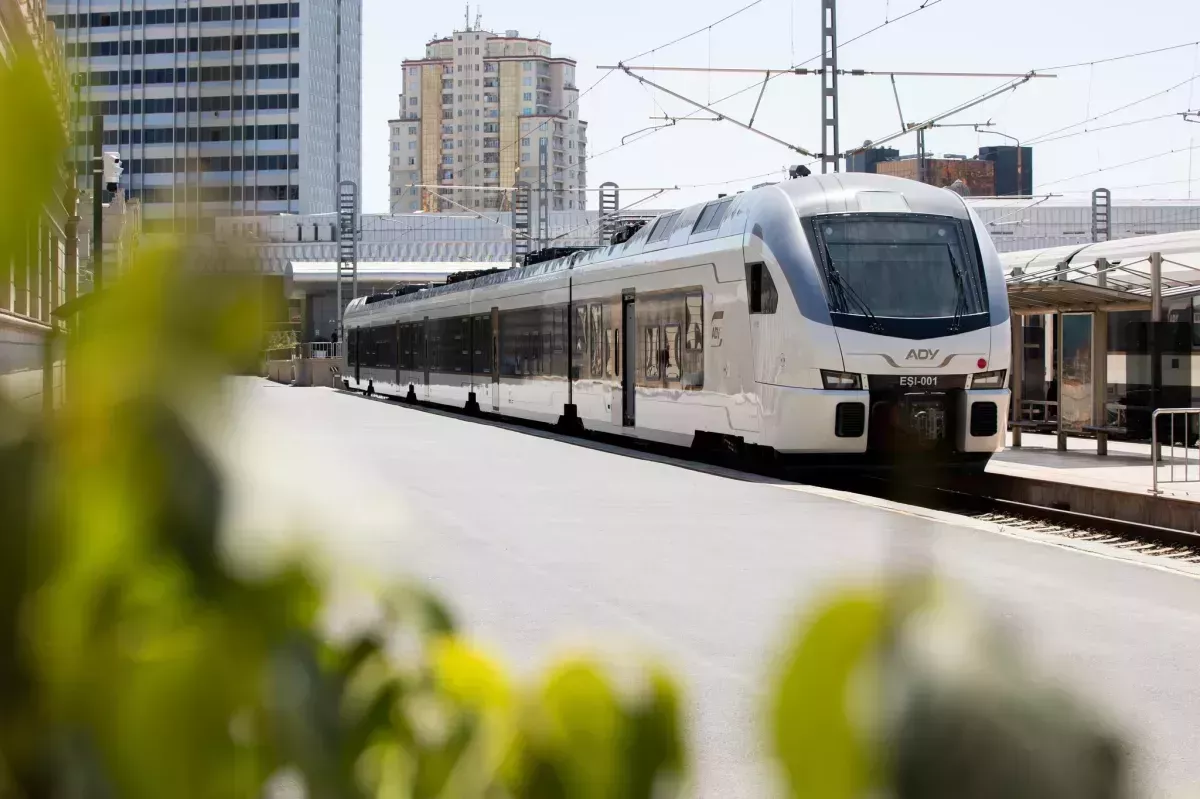
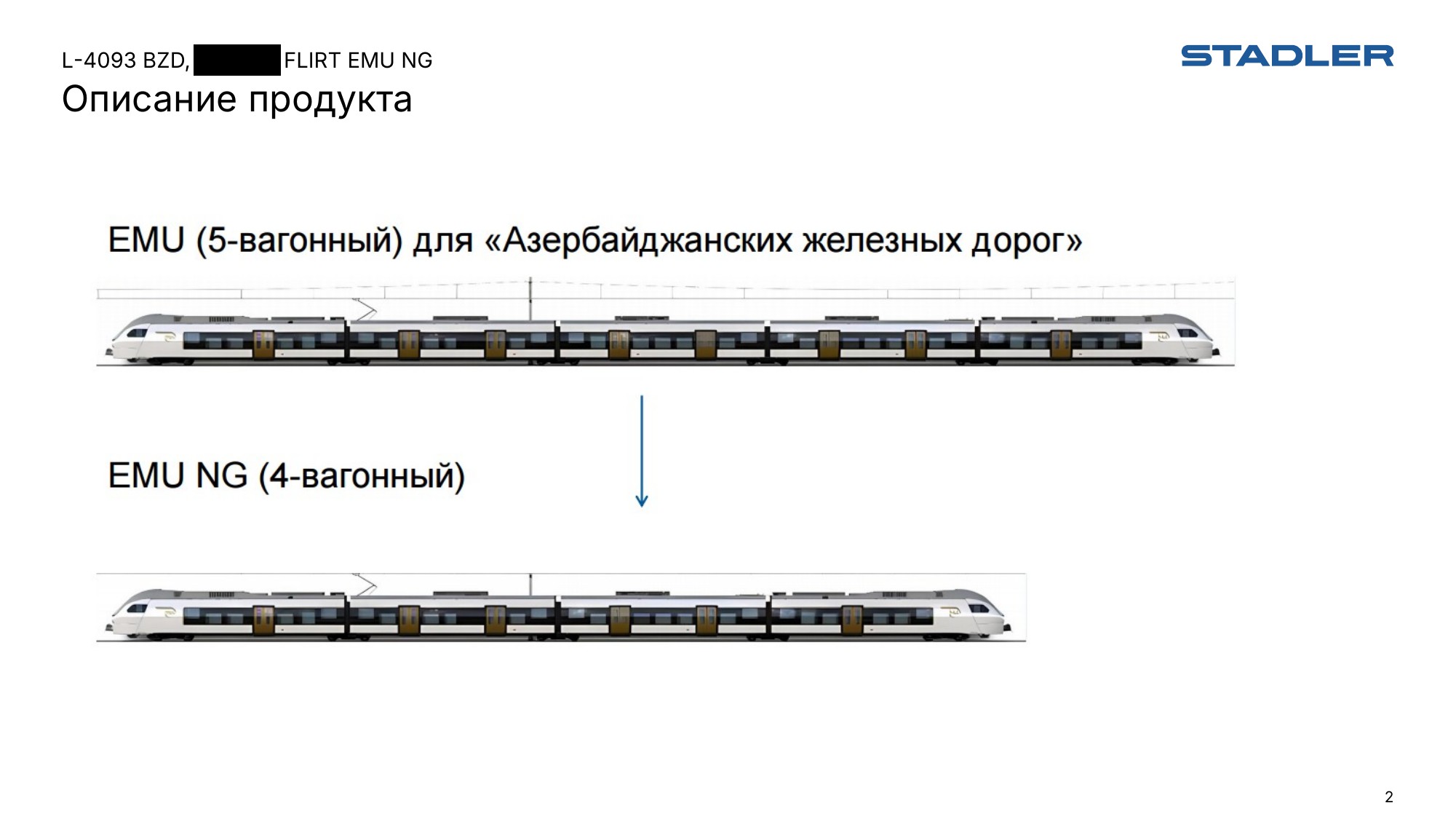
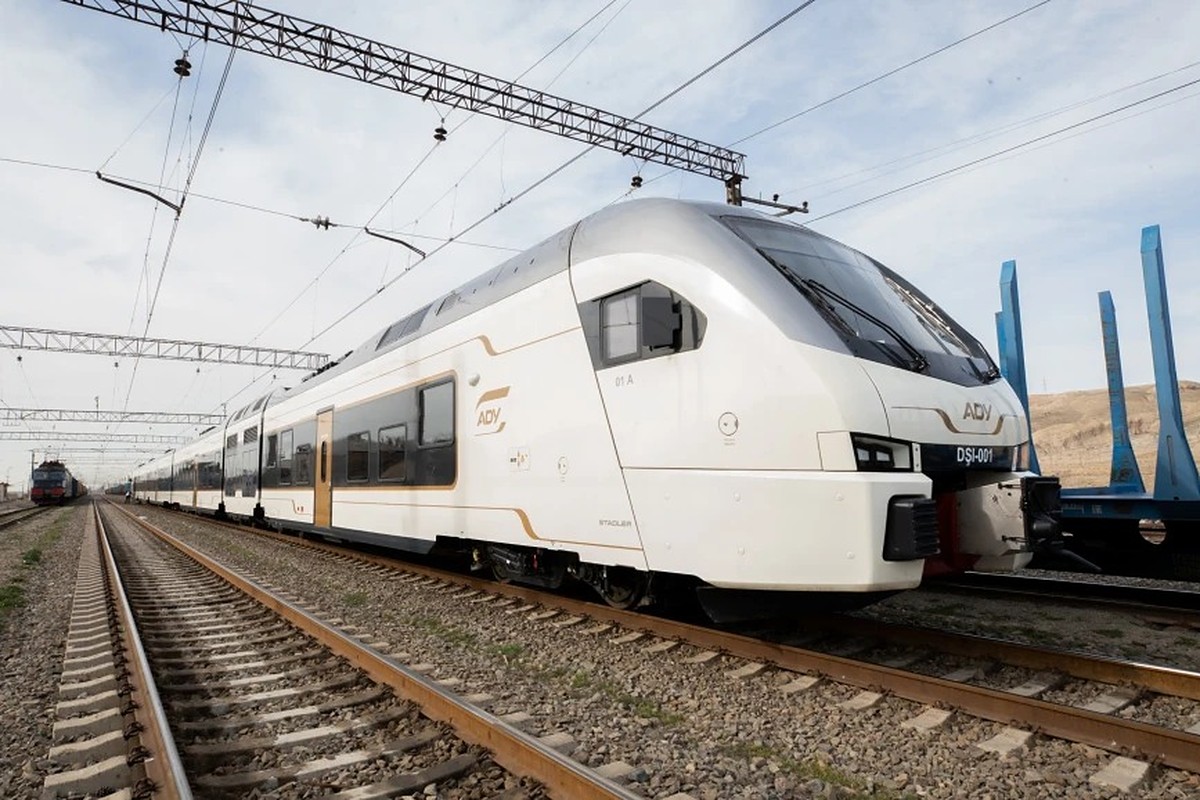
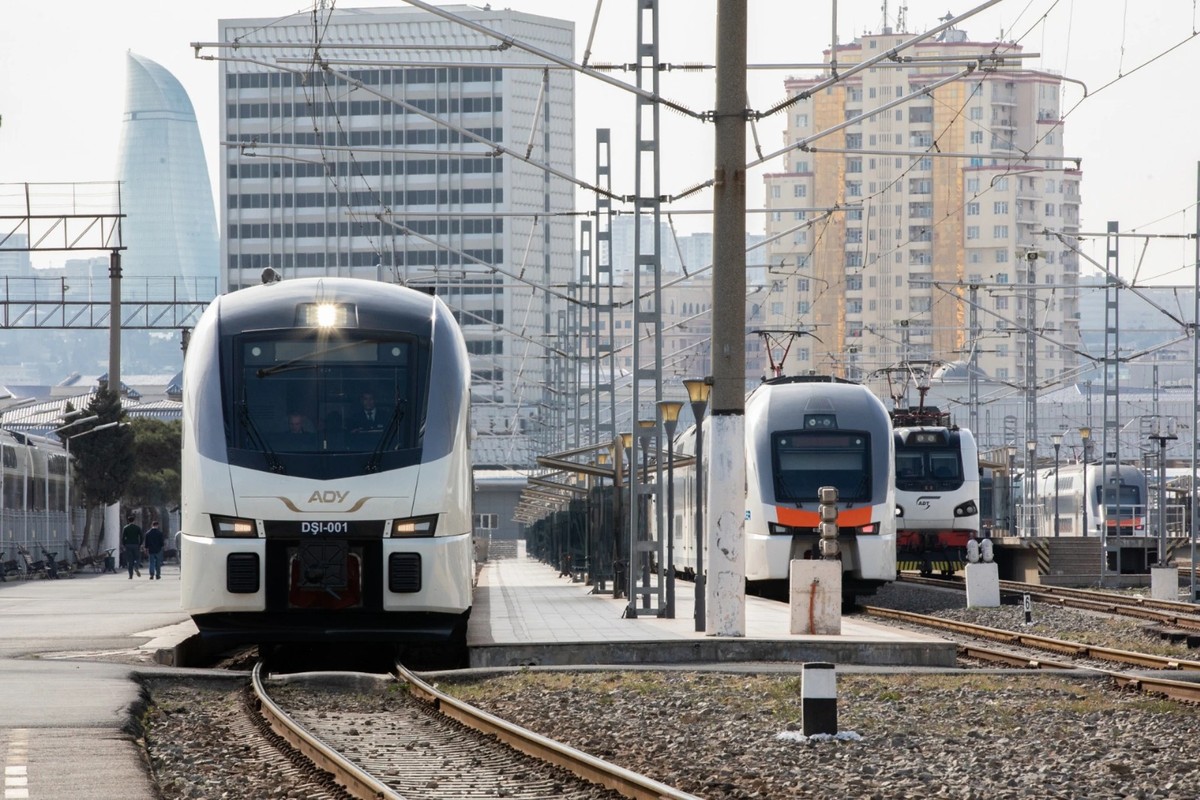
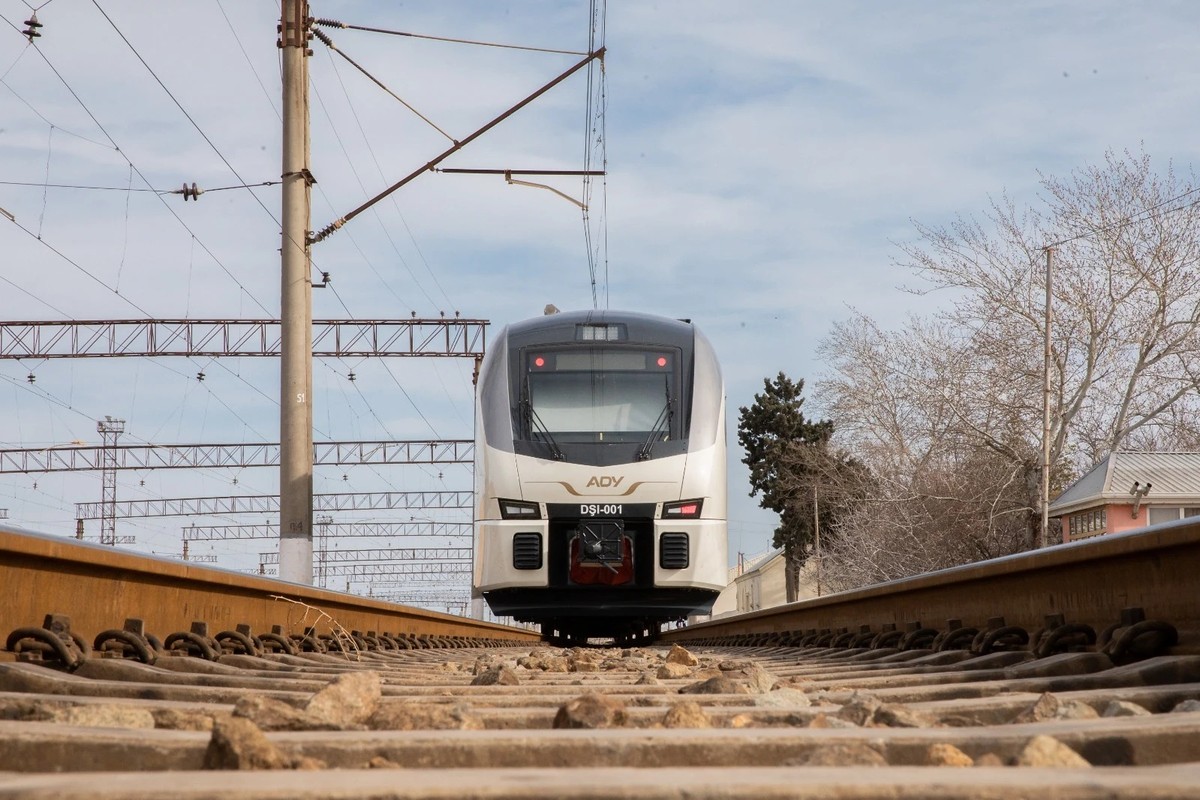
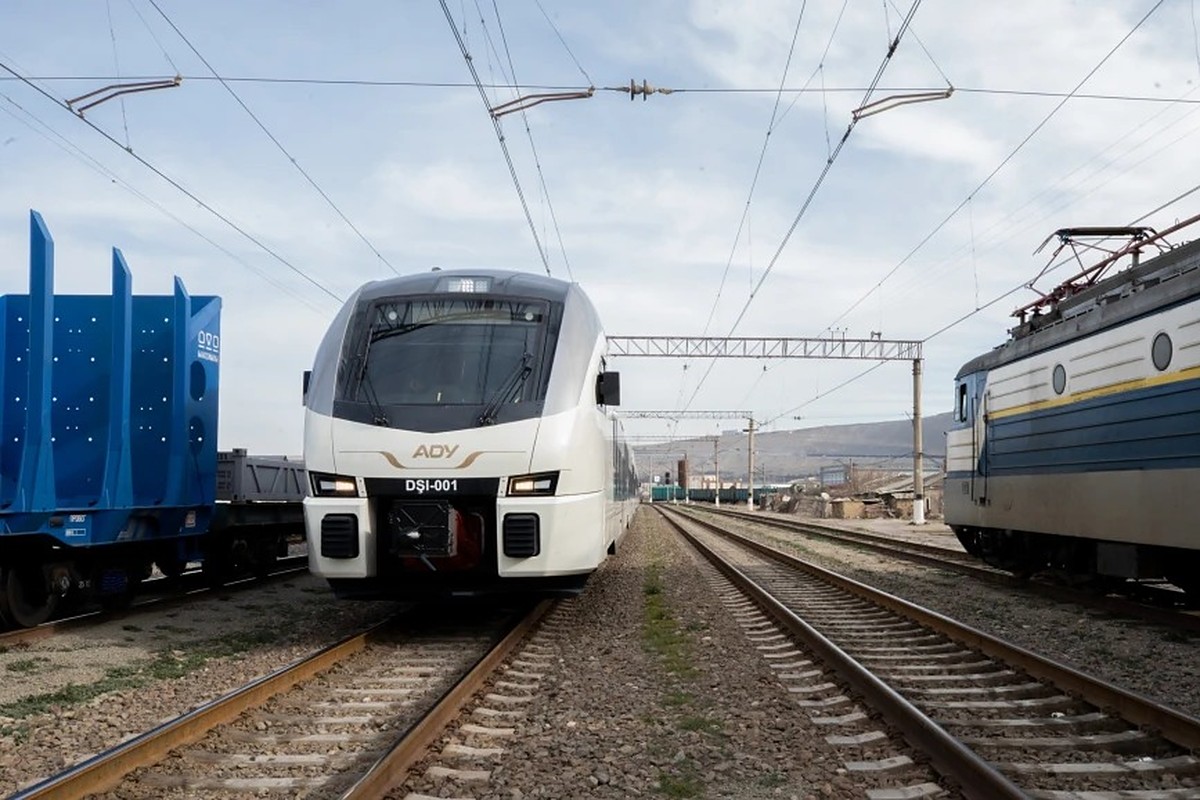
The project is called L-4093 BZD, FLIRT EMU NG. The documents explicitly name the state association “Belarusian Railway” as the customer, and the order covers 30 four-car new-generation electric multiple units (EMU New Generation). It is based on the five-car FLIRT EMU that Stadler built for Azerbaijan Railways; the new train is a shortened four-car version of it.

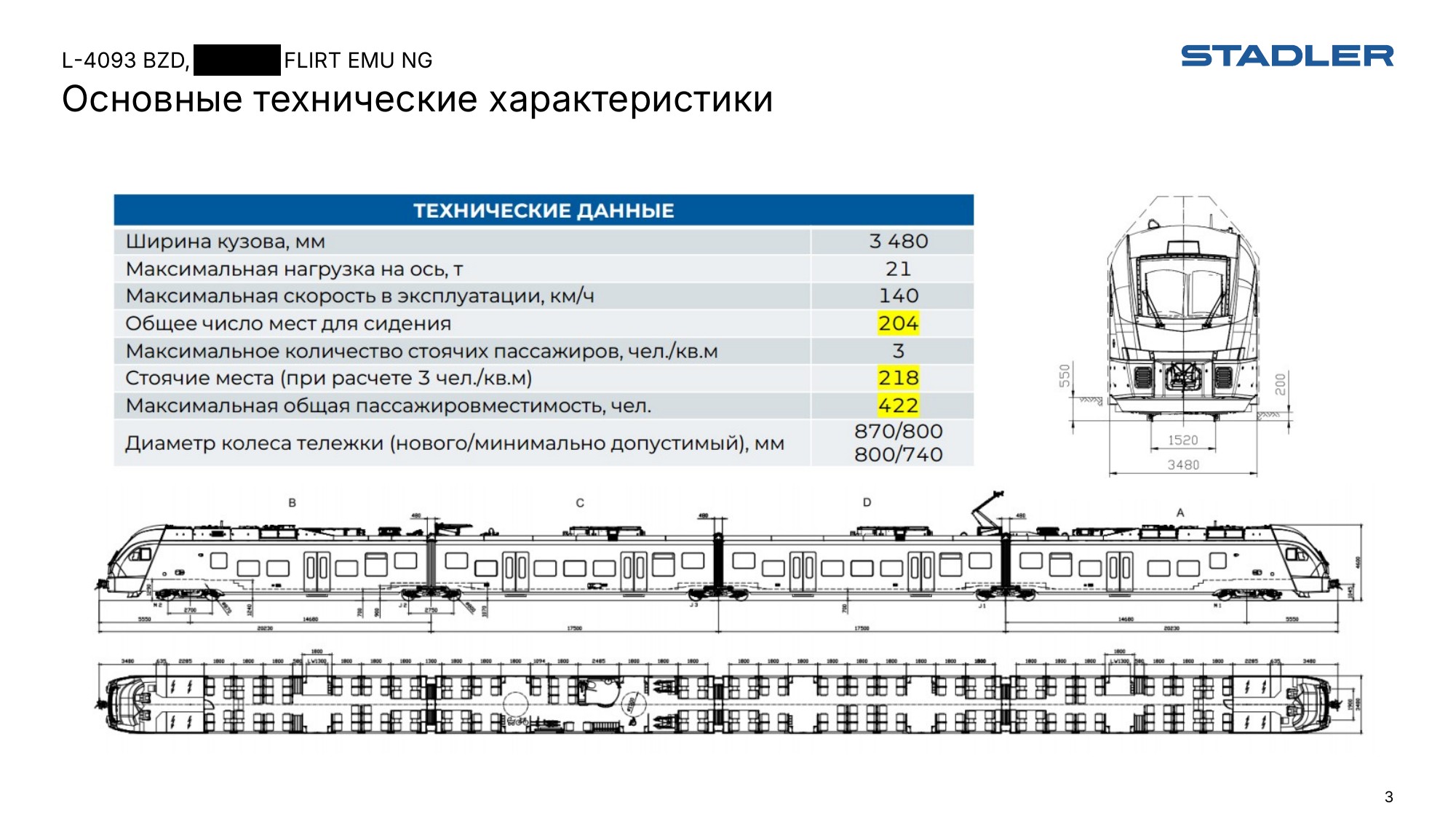
| Parameter | Value |
| Formation | 4 cars on 5 bogies: 2 motor bogies at the ends, 3 Jacobs bogies between the cars |
| Length | approx. 75.5 m: end cars 20.23 m each, intermediate cars 17.5 m each |
| Body Width | 3480 mm |
| Height above Top of Rail | 4600 mm |
| Track Gauge | 1520 mm |
| Maximum Operating Speed | 140 km/h |
| Capacity | 204 seated (2+2) and 218 standing at 3 people per m², total 422 |
| Doors | 6 double-leaf doors on each side, 1300 mm opening |
| Interior | wheelchair-accessible toilet, spaces for wheelchairs and bicycles |
| Axle Load | up to 21 t |
| Wheel Diameter, New / Worn Limit | 870/800 and 800/740 mm |
| Climate | from −40 to +40 °C |
| Design Duty Cycle | 20 h per day, 360 days per year: 7200 h, 200,000 km and 20,000 stops per year, average speed 28 km/h |
| Service Life | 35 years |
| Requirements | TR CU 001/2011; welding — EN 15085 or its GOST version; adhesive joints — EN 17460 or GOST R 71153 |
| Warranty | 36 months from commissioning |
“All cars will be assembled in the Republic of Belarus,” the documents say. The same documents describe the project as prospective: technical documentation for it is still being prepared. Even so, the schedule is already set: deliveries are to begin in mid-December 2027 and end by late 2029.
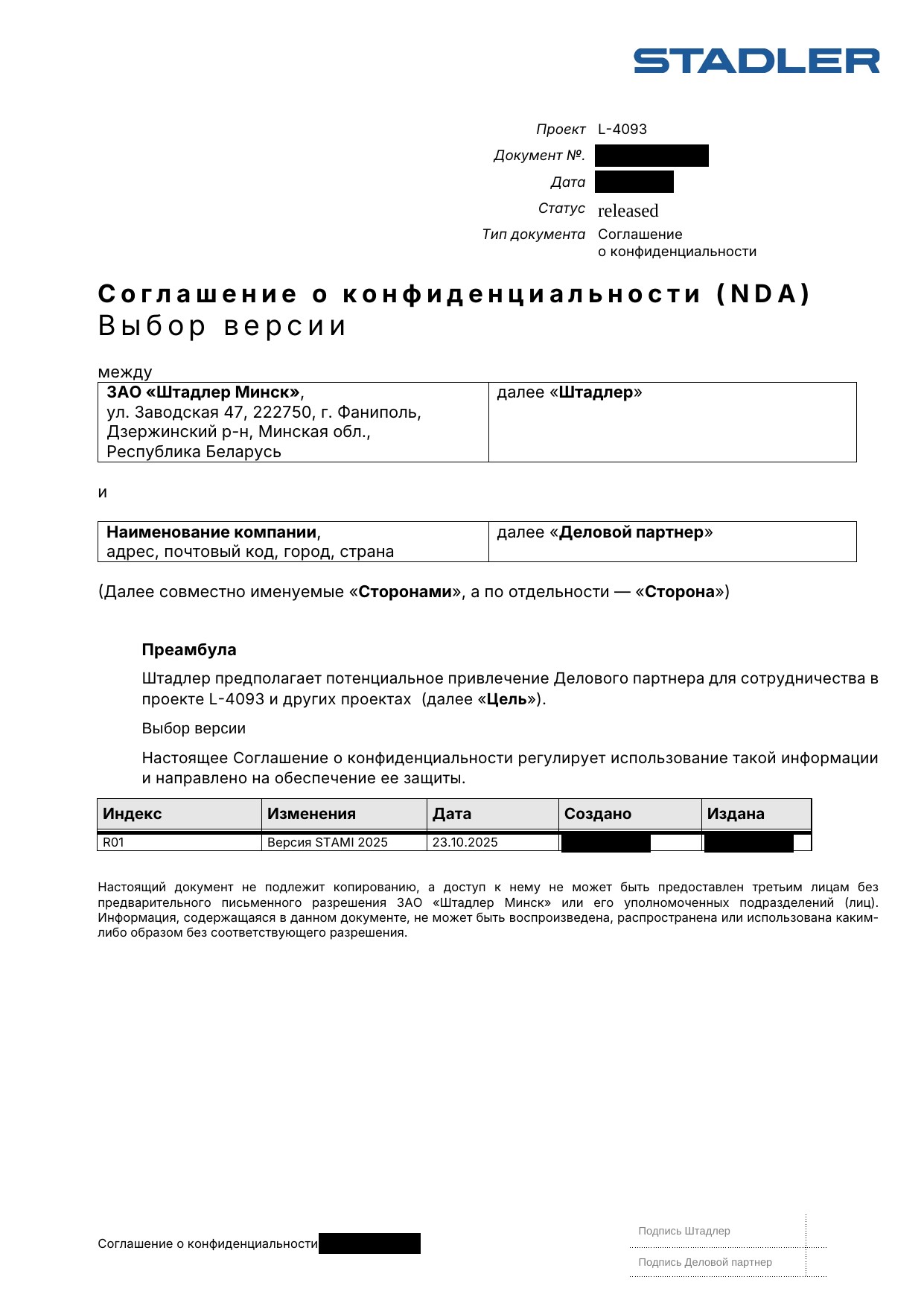
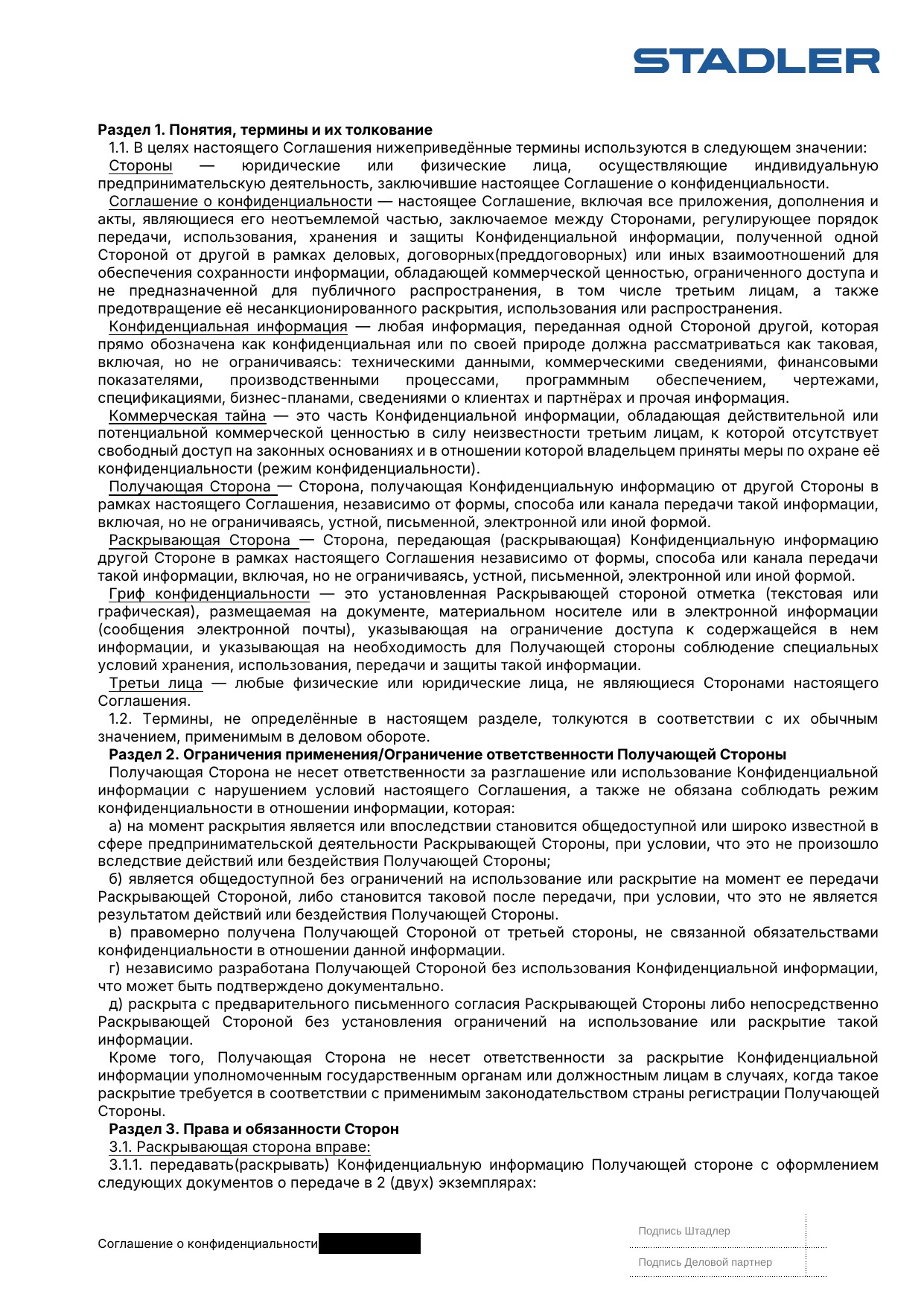
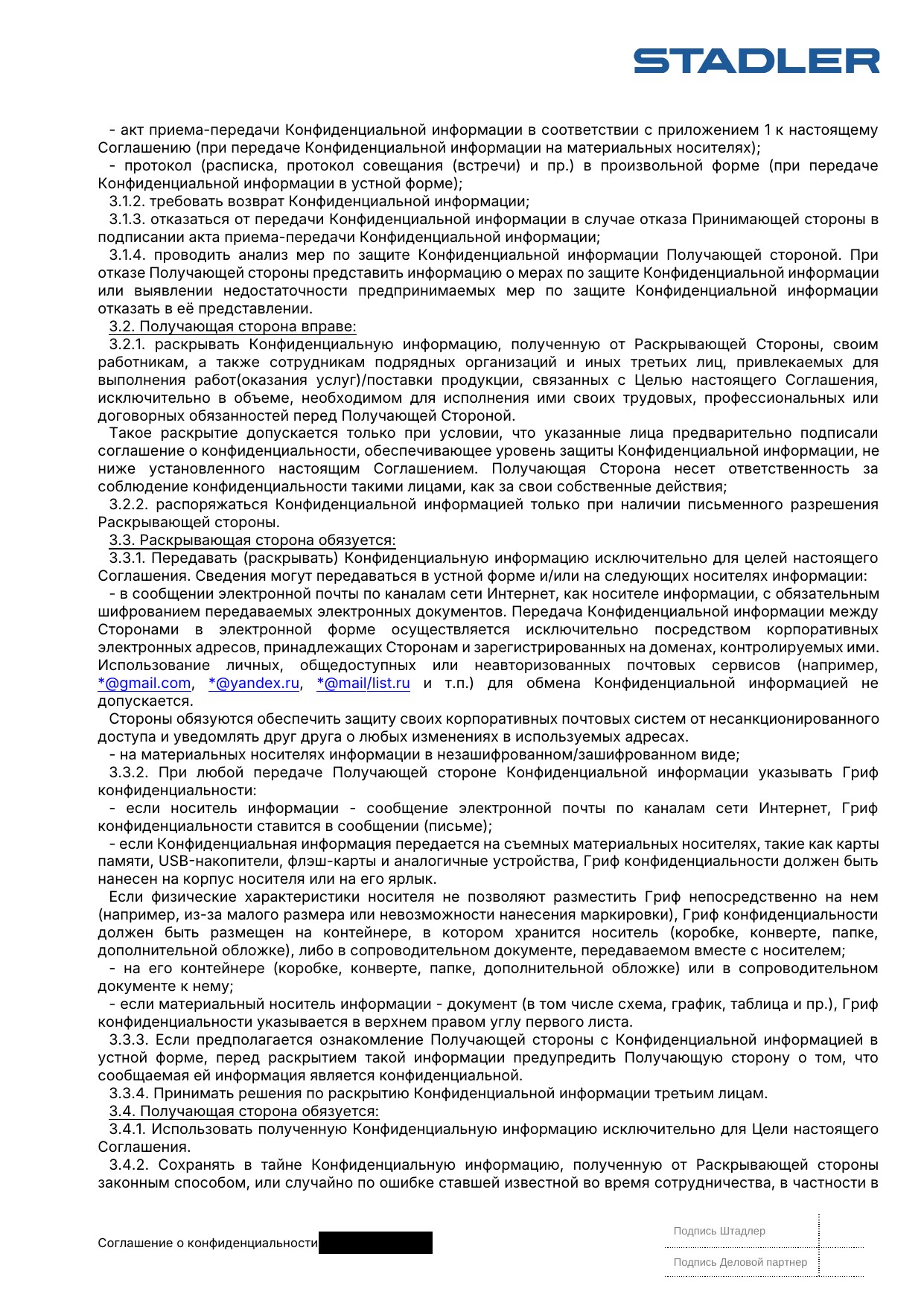
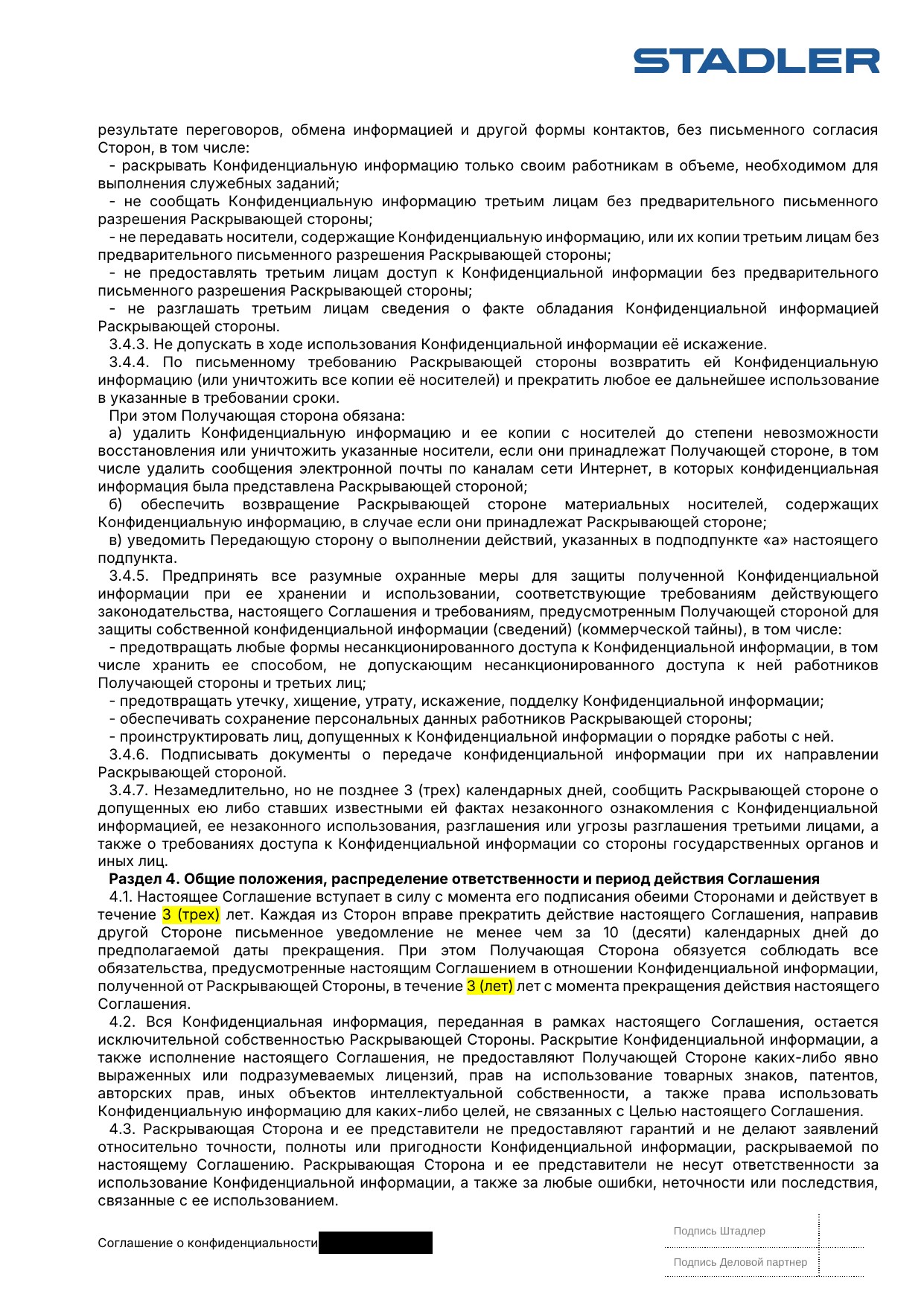
The plant has sent general information about the project to many potential suppliers, but it hands over the train documentation only after a non-disclosure agreement is signed. The agreement has a separate section on Stadler Rail AG: it warns the partner that the group’s shares are traded on the SIX Swiss Exchange and that the information received could affect their price, and it requires compliance with insider trading laws, including Swiss ones.
What Was Said Before
Discussions about resuming production in Fanipol have been ongoing since autumn 2024. At that time, Transport Minister Aleksey Lyakhnovich spoke about plans to set up assembly of multiple units from major components at one of the Belarusian plants, and a joint venture with two large Russian corporations was also discussed as an option. Stadler responded that it had no intention of selling the plant and was not participating in negotiations between Belarusian officials and Russian companies. According to a company representative, by then the main production had been moved to its plants in the West, and about 200 employees remained in Fanipol.
In late August 2025, the topic resurfaced. Alexander Khoroshevich, First Deputy Head of the BCh, announced that the railway was signing a major contract with Stadler for 65 trains to be built in Fanipol — according to industry publications, 30 electric multiple units and 35 diesel multiple units. Khoroshevich admitted that there were difficulties with the supply of some components but added that suppliers were being sought outside Europe.
A few days later, Stadler denied this, while confirming that it had held talks with BCh but that there was no deal: Stadler cannot supply trains to Belarus under current sanctions and has no plans to change this in the near future. According to the company’s official position, rolling stock has not been produced in Belarus since 2022, only mechanical processing of components is permitted in Fanipol, and the company promises to bring the plant back to full operation once sanctions are lifted. Still, in November 2025, Stadler Minsk received its first certificate since 2022 under TR CU 001/2011 — for welded bogie frames for cars that Stadler assembles in Kazakhstan.
The Tender That Failed
On March 20, 2026, six months after Stadler denied Khoroshevich’s statements about the contract, the BCh announced a procurement for 30 four-car AC electric multiple units, with a budget of 908 million Belarusian rubles and guaranteed delivery by the end of 2030. According to our data, the conditions were specifically tailored for the EP3D series electric multiple unit produced by Demikhovo Machine-Building Plant (DMZ), part of Transmashholding. We should note that information suggesting the tender was not entirely fair was published on our website even before its results were announced. The only bid came from DMZ, which asked for 33.7 billion Russian rubles for a batch of 30 of its electric multiple units, or about 1.27 billion Belarusian rubles, which was 359 million more than the BCh’s estimated budget. Unsurprisingly, on April 24 the procurement was declared unsuccessful.
The Stadler Minsk project documents concern the same 30 four-car electric multiple units for BCh. The delivery period, from December 2027 to the end of 2029, fits within the tender’s timeframe, although the procurement itself is not mentioned in the documents. The speed is noticeably different: the EP3D is designed for 120 km/h, while the new FLIRT is designed for 140 km/h. Overall, the Swiss manufacturer’s products are far ahead of Russian designs, which at best belong to the last century.
Why the BCh Needs New Commuter Trains
The BCh currently has 28 Stadler-produced electric multiple units. All of them are assigned to the Minsk multiple-unit depot (TCh-9). In March, more than ten of them were taken out of operation due to a shortage of spare parts and components: European suppliers comply with sanctions imposed against Belarus. In spring and summer, some trains were returned to service after repairs: on city lines, and from August 4, to Brest. But the problem has not gone away: as of July 20, 2026, the list of scarce spare parts included 155 items for Stadler trains, and 150 of them were classified as “particularly critical”.
The worst situation was with the so-called “urban commuter trains” of the EPg series: in February 2026, only one train out of six was on the line. As early as spring 2025, four of them were standing idle with worn wheelsets — Stadler, complying with sanctions, does not sell them, and as we wrote then, there were “no wheelsets for this series and nowhere to get them.” Another weak point is the traction converters, which we called the “Achilles’ heel” of these trains. They are traditionally supplied by Swiss ABB, and Stadler also works with Spanish Ingeteam and is developing its own Stadler Converter division. All three manufacturers are from countries that support the sanctions against Belarus.
BCh was already planning to renew its passenger fleet back in the winter. The minutes of the technical and economic council meeting on February 20, 2026, record an instruction to relevant managers and departments to work on renewing the fleet of multiple units, as well as shunting and freight locomotives, “taking into account the need for traction resources and the prevailing situation.” Exactly one month later, BCh announced the tender mentioned above.
What the Documents Don’t Contain
The price is not in the documents, nor is there an answer to whether a contract for assembling the trains has actually been signed, or what money BCh intends to use to pay for the Stadler trains. Diesel multiple units, which were discussed in 2025, are also not mentioned — only 30 electric multiple units. For reference: in 2019, Azerbaijan ordered ten five-car FLIRT trains from Stadler, six electric and four diesel multiple units, for 115 million euros, while the budget for BCh’s failed tender amounted to approximately $10.7 million per four-car train.
The documents also do not show whether Stadler’s headquarters in Switzerland is participating in the new Belarusian project. The company itself, in a statement cited by Zerkalo, wrote: “Stadler recognizes that under current conditions, neither the supply of trains to Belarus nor the production of trains in Belarus is permitted.”
Still, it is hard to believe that no one at Stadler in Switzerland knows about the project. The plant belongs to the group, the new train is a reworked version of its own FLIRT, Stadler itself spoke about talks with BCh a year ago, and the agreement with suppliers specifically mentions Stadler Rail AG. And if the group does know about the project, the question is how that squares with its own statement.
Finally, the documents do not say who will supply the traction equipment, brakes and electronics for the new trains, and that is exactly what determines whether such an order can be fulfilled without circumventing sanctions.
Can It Be Done Without Circumventing Sanctions?
The BCh as an organization has been under sanctions from Canada since November 2022 and Ukraine since January 2023, but for EU and Swiss companies, general restrictions against Belarus are more important. Since summer 2024, the EU has prohibited “directly or indirectly” supplying goods capable of strengthening Belarusian industry, along with technical assistance, licenses, and know-how. The Belarusian state and its enterprises, including the BCh, may not be provided with engineering and architectural services, IT consulting, testing, and technical inspection. Switzerland introduced almost the same measures in autumn 2024.
Stadler Minsk itself does not directly fall under these prohibitions: it is a Belarusian company. Since 2024, European firms are obliged to ensure that their subsidiaries abroad do not participate in circumventing sanctions, but there is no such rule for Swiss companies — Bern did not introduce it. However, welding bodies and bogie frames and assembling a train in Fanipol is only part of the job. Traction equipment, brakes, doors, and electronics for the FLIRT series rolling stock are supplied by Western companies, from which the BCh cannot currently even buy spare parts for its already operating Stadler trains.
Stadler has already faced this problem. The Azerbaijani FLIRT trains, on which the new train is based, were originally planned for assembly in Fanipol, but due to sanctions, assembly was moved to the plant in Siedlce, Poland, and the first trains arrived in Azerbaijan only at the end of 2023, although they were expected in 2022.
Technically, Western parts could go through Kazakhstan: Stadler has a plant in Astana, Stadler Minsk already makes bogie frames for it, and there are no customs borders within the EAEU. But the European ban also applies to indirect supplies for use in Belarus, so such a route would also be a circumvention of sanctions. There are no signs of such supplies in the documents.
Without circumventing sanctions, the project has two paths.
One can make a train with Russian or Chinese components and design it without engineers from the EU and Switzerland — in that case, only the body and bogies would remain from the FLIRT. But both Russian and Chinese rolling stock manufacturers still use European, American, and Japanese components. And in a train like the EMU New Generation, there is a lot of complex electronics. For example, the main power switches in traction converters are IGBTs, insulated-gate bipolar transistors. Among the well-known manufacturers of such modules are Infineon Technologies (Germany), Hitachi Energy (Switzerland) and Mitsubishi Electric (Japan). Chinese CRRC and Russian Proton-Electrotex also produce their own IGBT modules for railway technology, but replacing the standard ones would mean redeveloping and testing the converter.
Even if the capacities in Fanipol are sufficient, workshops alone are not enough. Besides bodies and bogies, a train needs electronics, control systems, software, documentation, diagnostics, and testing equipment, and then also safety certification for the entire train. Replacing European components with Russian or Chinese ones would essentially mean developing a different modification of the train. Neither Russia nor China has free access to the original solutions and software of European FLIRT suppliers. Therefore, it is unlikely that such trains can be produced in Belarus without the Swiss company and European manufacturers.
The second path is to sell the Fanipol plant. This option was discussed in 2024, but in this case, the train would no longer be a Stadler.
The first option, moreover, contradicts the company’s own statements that trains cannot be produced in Belarus.
What’s Next
And so, against this backdrop, while Stadler Minsk is working on the production of electric multiple units for the BCh, and Stadler publicly states that trains cannot be produced in Belarus under sanctions, Lukashenka instructs the State Control Committee to investigate the plant and how the BCh purchases its products. In the spring, the railway tried to buy electric trains from Russia’s DMZ. Lukashenka does not accept references to sanctions: “Whoever needs it, buys it.” He also mentioned “the owners’ promises, which have not yet been fulfilled,” and that the government and the Minsk Regional Executive Committee, according to him, “have no vision for the enterprise’s development prospects.”
All this smacks of nationalization of foreign property. Especially since the tool for this exists: since 2023, regional executive committees can transfer companies whose owners are from “unfriendly” countries, and who, according to officials, are not effectively managing the business, to temporary external management. Switzerland is on this list, and the measure’s validity has been extended until the end of 2028. In such a case, the fate of the Fanipol plant would be decided by the Minsk Regional Executive Committee, which, according to Lukashenka, lacks a vision.
Related materials:
From Stadler to ChME3: How Spare Parts Shortages Complicate BCh Rolling Stock Repairs (in Russian);
Tender Tailored for DMZ Falls Through: BCh Fails to Procure Multiple Units (in Russian);
BCh Plans to Buy New Russian-Made EP3D Electric Trains (in Russian);
Technical Condition of Stadler Electric Trains Remains Strained (in Russian).